Showing posts with label post-apocalyptic. Show all posts

Friday, 11 March 2011

Review: The Enemy (The Enemy #1) by Charlie Higson

Synopsis from Goodreads:

They'll chase you. They'll rip you open. They'll feed on you...

When the sickness came, every parent, policeman, politician - every adult - fell ill. The lucky ones died. The others are crazed, confused and hungry. Only children under fourteen remain, and they're fighting to survive. 

Now there are rumours of a safe place to hide. And so a gang of children begin their quest across London, where all through the city - down alleyways, in deserted houses, underground - the grown-ups lie in wait. But can they make it there - alive?


Review  (with spoilers):

I picked up The Enemy because the synopsis sounded fantastic- and it turned out the content was great for the most part. What would it be like to live in a world without adults? Would there be any order or would it be every girl and boy for themselves? 


The Enemy answered these questions. The world has turned into a dark and uncertain place and the reader follows a large group of kids as they cross London in hopes of a better and safer place to live, away from the infected Grown ups. 


First of all, I wish that there had been one character from the beginning to the end that I could have called the 'main' character. Though I liked the different perspectives of all the characters and the bigger picture this afforded me through characters such as Maxie, Achilleus, Callum, Ollie and Ben and Bernie, I wanted one character I could have felt especially close to.


My favourite characters were probably Small Sam- who was small but very brave- and Arran- who I thought would be the main character, but who gave me a great shock when he died quite early on in the book. I was thrown by his death because I was sure he was going to be the 'main' character that I wanted as other characters spoke about him like he was an anchor and because he was the leader.


However, this just goes to show how uncertain life in a post-apocalyptic society is. There were a lot of deaths in The Enemy due to the Grown up-infested streets and I felt sad for some of the characters who died  but was glad that the other characters paid respect to them or remembered them. 


I was surprised when Blue and Maxie got together at the end because I hadn't seen anything that indicated that they liked each other romantically. I liked level-headed Ollie but knew what he was up to towards the end of the book regarding spying on David and gathering information. I felt annoyed by Callum. I did feel sorry for his situation but wished he would have changed and gone in search of his friends or at least fought back against the Grownups.

The story was fast paced, action packed and detailed. As expected, there was violence and some strong language. I enjoyed Higson's story-telling. Though the word 'zombie' was only used once or twice in the book, the infected adults had almost all the symptoms of zombies, so I think it would be safe to call them that.

I wanted to know more about how the 'sickness' and how it started. I knew it was hard enough for the children to just survive, but I was hoping that they would want to find out how the sickness had started. We're given a little clue that it has something to do with sunlight or the air, but hopefully more will be revealed in the next book. I wanted to know why some of the adults died straight away and why some of them took longer to die.


Though the enemy are the Grownups, the most evil characters were definitely Nick and Rachel; a pair of cannibals living in the underground. They appeared so nice at first and this just made them all the more evil when the truth was finally revealed. When there's no food, cannibalism is a solution for some and the addition of these two characters definitely made the story more authentic and the characters' situatuons all the more desperate. How had Nick and Rachel survived the sickness and how had they known to go underground?


I really wanted a big fight at the end of The Enemy between David's group and the Holloway group but this didn't transpire unfortunately. Though, it might have meant there would have been some casualties, it would have been exciting to read.


Overall, The Enemy was an exciting, action packed story.The plot was very strong and there were some shocks and surprises at the end. I read this in a matter of days because I wanted to know what would happen next. I'm looking looking forward to reading the next book, The Dead (which it turns out, is actually a prequel and with different characters). I would recommend The Enemy to people who enjoy lots of action, violence and post-apocalyptic worlds. Oh, and zombies. 

Book Rating: 4.5/5
Concept: 4/5
Cover: 5/5 (It's actually much nicer in reality)
Author: Charlie Higson

Monday, 29 November 2010

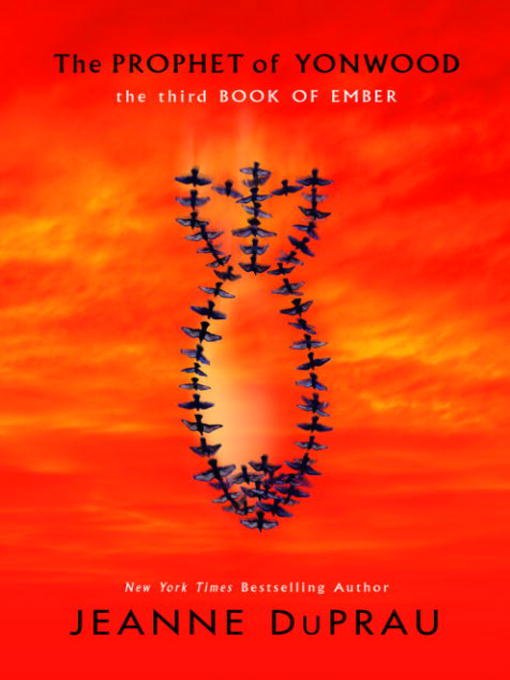
Review: The Prophet of Yonwood (Ember #3) by Jeanne DuPrau

Synopsis from Goodreads:


It’s 50 years before the settlement of the city of Ember, and the world is in crisis. War looms on the horizon as 11-year-old Nickie and her aunt travel to the small town of Yonwood, North Carolina. There, one of the town’s respected citizens has had a terrible vision of fire and destruction. Her garbled words are taken as prophetic instruction on how to avoid the coming disaster. If only they can be interpreted correctly. . . .

As the people of Yonwood scramble to make sense of the woman’s mysterious utterances, Nickie explores the oddities she finds around town—her great-grandfather’s peculiar journals and papers, a reclusive neighbor who studies the heavens, a strange boy who is fascinated with snakes—all while keeping an eye out for ways to help the world. Is this vision her chance? Or is it already too late to avoid a devastating war?

In this prequel to the acclaimed The City of Ember and The People of Sparks, Jeanne DuPrau investigates how, in a world that seems out of control, hope and comfort can be found in the strangest of places.

Review:
I was highly excited to read The Prophet of Yonwood after having loved both The City of Ember and The People of Sparks. I didn't hesitate in purchasing a copy. However, to put it plainly, the third book of Ember was one of the most disappointing books that I have read in my life.  

I started reading the novel; the 'prequel' to the two previous books, expecting an explanation of how The City of Ember came about and that I would learn more about the disaster that had lead to the city of Ember being created. What I got instead was the life story of an eleven year old girl. 

There's nothing wrong with that. DuPrau could have made her into a phenomenal character and akin to the protagonists from The City of Ember, Lina and Doon. However, what I read instead was the trivial, boring and random happenings of the small, nosy neighbourhood Nickie moves to with her aunt Crystal for some months.


Unbelievably, Nickie's aunt leaves her, an eleven year old girl who doesn't know anything about her new surroundings, to her own devices, while she goes gallivanting around town nearly every day. I was seriously worried for Nickie's safety.

What would happen if a stranger knocked on the door and kidnapped her? What if the house was unsafe and she injured herself? More worryingly, this continued to happen throughout the entirety of the novel and therefore I didn't learn anything about Nickie's aunt, except that she gets married at the end of the book and I couldn't even care by that point.


So many aspects of this book continue to irritate me and I shall list some of them here. Her aunt didn't know of any of the random events that were taking place in the town and Nickie had to explain everything to her at the end which was rather exasperating to read as everything was repeated.


Nickie and her aunt always ate soup or drank herbal tea. This may seem like a little gripe, but it's not. How unrealistic is it that this would be the only things they would eat? I think you would get sick of eating the same thing after the second or third day.


This book was called 'The Prophet of Yonwood' and therefore one would assume that we would see a lot of this person and discover the meaning behind their prophetic messages. That was not the case. The 'Prophet', Althea, has a vision of a future apocalyptic world (something the reader figures out for themselves) and loses conciousness for the majority of the book. Her incoherent words are interpreted by Mrs Beeson, the local busybody. For some unstated reason, the whole town and even the police, take her word for what Althea might be saying and follow her laws, however silly they may be.


Nickie wasn't the curious minded, clever heroine I wanted and I found her lacking in every way. All in all, she was childish, bratty and annoying. She never sought out the 'Prophet' for herself to uncover the true meaning of her words and she never went against Mrs Beeson's strict rules (unless you count her hiding the dog).

It's not until very end-I literally mean the last five pages or so- that you see any connection whatsoever to The City of Ember and its sequel and that connection was rather frail and insignifant to me as I'd realised these obvious epiphanies from the beginning of the book.


Other random events include but are not limited to:


1) Nickie discovering a journal in which ghosts and siamese twins are mentioned. She would read about two sentences from the journal and then become bored, tired or have something else to do, sometimes it was all three. This added nothing to the plot and I'm still wondering why on earth it was included in the book.


2) A strange astronomer who reveals nothing and therefore adds nothing to the plot.


3) A boy named Grover who liked snakes.


The major problem was that Nickie was so, so far away from anything to do with The City of Ember. I would much rather have preferred the story to be from her father's point of view as he had much more to do with Ember. He sent her postcards about the building work he was doing. It was very obvious what his connection to the City of Ember was.


I really could go on as there were so many ways in which this book failed me. I would not recommend this 'prequel' to anyone at all. It added nothing at all to the plot or background information of The City of Ember.


The characters were dull, one-dimensional and cardboad cutouts with exactly one boring agenda each. It felt like DuPrau had just flung together random bits of material to create something that resembled a book. I'm sorry that I ever read this and will never read this again. In comparison, The City of Ember and its sequel were very good. I'm still hesitant to read the last book, The Diamond of Darkhold because it may turn out to be major letdown similar to The Prophet of Yonwood.


Book Rating: 1/5
Cover: 3/5
Concept: 0/5
Author: Jeanne DuPrau

Sunday, 29 August 2010

Review: The People of Sparks


*Second Book in the series*

Summary from Goodreads:

The People of Sparks picks up where The City of Ember leaves off. Lina and Doon have emerged from the underground city to the exciting new world above, and it isn’t long before they are followed by the other inhabitants of Ember. The Emberites soon come across a town where they are welcomed, fed, and given places to sleep. But the town’s resources are limited and it isn’t long before resentment begins to grow between the two groups. When anonymous acts of vandalism push them toward violence, it’s up to Lina and Doon to discover who’s behind the vandalism and why, before it’s too late.

Review:

The People of Sparks is the post-apocalyptic continuation of the first in the series, The City of Ember. I highly enjoyed The People of Sparks as I really wanted to know what happened to the Emberites after they left their underground home and this book began where the first book left off and for that I was glad as I didn’t miss anything.

Lina and Doon remained strong, independent characters. In this book, they seemed to have their own journeys to take and they grew in different ways. This was different than the first book as Lina and Doon figured more of the mystery out together, but in this book, they were physically apart for longer lengths of time. I missed them working together. Also, I figured out the mystery of who was causing strife between the two groups before it was discovered in the book.

Of course, all the Emberites had to acclimatise to their new surroundings and I believe that DuPrau achieved this realistically. They slowly learnt to live on the surface of the world and tried to get along with the people of Sparks, with mostly negative results- until the end.

The new characters, the people of Sparks, were well written and 3D. They acted in ways that I would have expected them to so the story was believable. There seemed to be a lull in the middle of the story and I was waiting for it to pick up. Luckily, it did and the climax of the book was somewhat exciting and resolved nicely. The ending, like the first book, was exciting and filled me with hope as to what would come next.

I liked the message of The People of Sparks. I think the book asks us to all work together and put aside our differences (Not working together will just lead to discord). All the themes, such as learning, friendship, the idea of community and oneness were interesting to observe in The People of Sparks.

Overall, while I enjoyed The People of Sparks, I didn’t feel as though it was as good as it could have been and it wasn’t as good as The City of Ember. However, Lina and Doon did mature and develop as characters and it was exciting to watch them learn about the world.

DuPrau’s style of writing was mostly engaging. The book was good; it ended in such a way that it made me want to know what would happen next. After this, DuPrau wrote The Prophet of Yonwood, the third Book of Ember, which was a prequel to the series and The Diamond of Darkhold, the fourth book which shows what happened to the People of Ember next.

Although I have read The Prophet of Yonwood, I have not read The Diamond of Darkhold yet.

Book Rating: 4/5

Cover: 5/5

Concept: 3.5/5

Author: Jeanne DuPrau

I wrote this review as part of Dystopian August which is going on over at Presenting Lenore. Check it out.

Review: The City of Ember by Jeanne DuPrau


The City of Ember: The Ember series, Book 1

Summary from Goodreads:

The city of Ember was built as a last refuge for the human race. Two hundred years later, the great lamps that light the city are beginning to flicker. When Lina finds part of an ancient message, she’s sure it holds a secret that will save the city. She and her friend Doon must decipher the message before the lights go out on Ember forever! This stunning debut novel offers refreshingly clear writing and fascinating, original characters.

Review:

The City of Ember is fantastic. This novel was one of the first books that I read that got me interested in the dystopian/post-apocalyptic genre. The first time I read it I loved it. The idea of an entire society living underground (unbeknownst to them) captivated me. What would they eat? What did they look like? Did they have any knowledge of the outside world? These were questions that ran through my head.

I had many questions on how a society would live like this and they were all answered in the book. The City of Ember was a page turner and didn't disappoint. I constantly wanted to know what was going to happen next and I couldn’t put it down, so I read well into the early hours of the morning.

Lina and Doon were great characters who were in the centre of the action at all times. They were inquisitive, brave and I was able to sympathise with them. When I first read The City of Ember (around the age of fifteen or sixteen) I admired these characters a lot. However, after recently re-reading the book, I realised that I would like more character depth. While DuPrau was very good at characterising Lina and Doon to make them appealing to readers, I would have liked to understand their thoughts and feelings more.

The City of Ember is in the third person and follows the two main characters, Lina and Doon as they try to save their flagging city. I enjoyed the visual descriptions of the city of Ember, however I would have liked more. There were parts of the book that were very sad (such as when the lengths some citizens went to discover what was outside of the city). Working out the clues was also really fun and I appreciated the fact that Lina and Doon worked it out in time.

The pace of the book was great. I didn’t feel bored at all. There were some minor side-stories that became integrated into the main plot so everything in the book fit. One of my favourite parts would have to be the ending which set up the scene perfectly for the next book. The ending was emotional, visual and memorable. I felt sorry for the characters as they didn't know they were living underground and that the world had undergone a disaster.

Overall, The City of Ember was an excellent book that I was very glad to have read. It offered an interesting perspective of what could happen after a worldwide disaster. The characters were rounded and smart.

I believe that the novel can be enjoyed by readers of all ages. A movie has been made of The City of Ember. I liked the movie as it stayed mostly true to the novel. After I read The City of Ember, I was very keen to read the sequel, The People of Sparks. Look out for my review of the sequel coming soon!

Book Rating: 4.5/5

Cover: 5/5

Concept: 5/5

Author: Jeanne DuPrau

I wrote this review as part of Dystopian August which is going on over at Presenting Lenore. Check it out!

Saturday, 14 August 2010

Book Review-Children of the Dust by Louise Lawrence


Summary from Goodreads:

The story begins on a May afternoon in England. The sirens wail and people panic - war has suddenly broken out between East and West and the bombs are falling. Very soon the war is over, and from that afternoon the world has changed forever...

Sarah's story is about what it is like right after the nuclear holocaust, with Sarah, her step mother, and her half brother and sister sealed inside a dark house, and dealing with the effects of the radioactive fallout.

"Ophelia" takes place a little later, in a bunker filled with people who have survived the holocaust. They try to maintain and uphold a civil society, and to prepare for the world that's waiting for them outside.

The third story, "Simon" takes place decades after the war and we see a new species of human has emerged as a result of the contaminated world.

~~~~~~~~~~~~~~~~~~~~~

Review:

I really enjoyed Children of the Dust by Louise Lawrence. I read this book years ago and it struck a chord with me. This was one of the first dystopian/post-apocalyptic novels I read and it was a great introduction into the genre. This novel makes you think very deeply about our world. Are we taking care of it? Will we really end up like this?

Lawrence has written a realistic, informative account of life after such a great disaster. Though Children of the Dust is quite dark and hope seems lost throughout much of the story, there were significant glimmers of humans recovering and progressing that it was enough for me to enjoy the book. Additionally, Children of the Dust ended on a very positive note and I was filled with hope for the future.

The story is narrated from three perspectives: Sarah, Ophelia and Simon-three very different characters that are intrinsically connected. This multiple-narration is something that I haven't observed in many dystopian books so I was very much enthralled. Instead of discovering the effects of this 'nuclear disaster' on only one generation, I was able to learn about three generations and thus know of the impacts in the long term.

Also, Lawrence has written the story in such a way that it was possible for me to sympathise with all three narrators. This had been an aspect I'd been worried about previous to reading the book, however, the multiple-narration did not affect me in developing emotional attachments with all three narrators. I liked the fact that Sarah, Ophelia and Simon all learnt and developed as characters. There were scenes where my heart was wrenching because of what the characters had to go through, for example, the innocence of William, Sarah's young brother, who did not understand what was happening.

My only qualm with Children of the Dust was that the reason for the supposed nuclear war was not obviously stated but only hinted at. I felt as though Lawrence was telling her readers: It is enough to know that it happened.

Overall, Children of the Dust was a highly enjoyable read that allowed me to delve into the minds of three generations of people affected by a nuclear disaster. I found the story very realistic and frightening in the possibility that it may happen one day. For me, Children of the Dust was an unforgettable tale about survival, family and hope.

Book Rating: 4.5/5 - Children of the Dust could have gone into more detail in some aspects.

Concept: 4/5 - I would have liked further depth in the story.

Cover: 4/5 - Very much in relation to the story, sad and poignant.

Extract from Children of the Dust.

I wrote this review as part of Dystopian August at Presenting Lenore. Check it out and take part!