Saturday, 17 December 2011

Review: The Mysterious Benedict Society and The Prisoner's Dilemma (The Mysterious Benedict Society #3) by Trenton Lee Stewart


Synopsis from Goodreads:

IF YOU FAIL,


ALL IS

LOST.

Join the Mysterious Benedict Society as Reynie, Kate, Sticky, and Constance embark on a daring new adventure that threatens to force them apart from their families, friends, and even each other.
 
When an unexplained blackout engulfs Stonetown, the foursome must unravel clues relating to a nefarious new plot, while their search for answers brings them closer to danger than ever before.
 
Review:

The Mysterious Benedict Society and The Prisoner's Dilemma by Trenton Lee Stewart was a fitting finale to the trilogy. The action was mostly confined to the house during the first half of the book which reflected the feeling of imprisonment that Reynie, Kate, Constance, Sticky and their families were feeling. 

The book was mainly concerned with the Mysterious Benedict Society attempting to avoid being captured by the sinister Mr Curtain and protecting The Whisperer from his evil intentions. Can Mr Benedict find the cure for the condition that afflicts him?

We learn more about Constance in this book. Light is shed upon her experiences before joining the Mysterious Benedict Society. However her astonishing powers are never fully explained as her parents were normal, unremarkable people and it is hard to believe that Constance would be able to do so much from the age of two. Constance must also find out whether the man claiming to be her father is speaking the truth or whether it is one of Mr Curtain's insidious plots to make use of her incredible mental abilities.

We also discover the full extent of Mr Curtain's cruelty as he punishes Reynie for something Kate did as he knows this would cause her great emotional distress. At a point in the book, Mr Curtain is given an opportunity to mend his ways to become a better person. However, he must choose whether to make use of this chance or not. Surprisingly, a silly character such as SQ Pedalian plays a pivotal role during the climax of the book. 

The characters are well-rounded throughout the trilogy; by this book they are defined. I loved all the characters as they were so vividly written. However, I was not impressed when Milligan, a skilled agent, when locked in perilous combat with Ten Men, uses an old trick that he utilised in the previous book. I felt he should have done something new and original.

The Mysterious Benedict Society and The Prisoner's Dilemma was witty, well-paced and full of action, making sure I kept reading. Yet again, there were interesting riddles to solve and I really enjoyed trying to figue them all out. I liked how the characters interacted with each other and mostly I liked the battle between good and evil.

Overall, The Mysterious Benedict Society and The Prisoner's Dilemma was a fantastic read. I would recommend it to everyone as it was funny and full of action. Children and adults alike will love this trilogy. I can't wait to read more from Trenton Lee Stewart, beginning with The Extraordinary Education of Nicholas Benedict and The Mysterious Benedict Society: Mr. Benedict's Book of Perplexing Puzzles, Elusive Enigmas, and Curious Conundrums 

Book Rating: 5/5
Cover Rating: 4/5
Author: Trenton Lee Stewart

Friday, 16 December 2011

Review: The Dragon Whisperer by Lucinda Hare


Synopsis from Goodreads:

Quenelda has always had a magical bond with dragons, and her greatest wish is to fly one and fight alongside her father in the war against the hobgoblins. Root, on the other hand, wishes only to avoid the fearsome creatures, so the role of Quenelda's esquire is the last thing he needs.

Review:

The Dragon Whisperer by Lucinda Hare was an interesting read. It began well, with a gripping prologue which made me want to read more. It tells the story of an aristocratic girl named Quenelda and her dream of becoming a dragonrider and fighting alongside her renowned father against the hobgoblin swarm. What Quenelda does not know is that she has many more enemies than she could imagine who are much closer to home and her extremely rare abilities as a dragon whisperer places her in even more danger.

The Dragon Whisperer is exciting and packed with action and suspense. There are also a few shocking deaths and Hare does not shy away from describing extremely traumatic events in minute detail.

The characters are well-rounded. The main characters, Quenelda and her esquire Root, undergo dramatic and profound character development over the course of the book. The hobgoblin enemy however, seems to be 1D. They are, like in many other books, indistinguishable from the monotonous legions of the dead or the demon host, which is disappointing. I also think that there is plenty of scope for certain characters to be developed further as they have only been briefly shown in this book (such as the Queen).

The Dragon Whisperer contains quite a lot of modern military style vocabulary although it is set in a medieval world. Hare also assigns new names for the hours of the day and for the months of the year which takes some getting used to and forces one to do some rapid calculations. The book is well paced but ended abruptly as this book is only the first in a series. I definitely think The Dragon Whisperer is well worth a read and I am eager to begin the next.


Book Rating: 5/5
Cover Rating: 5/5
Author: Lucinda Hare

Thursday, 15 December 2011

Review: The Maze Runner (Maze Runner #1) by James Dashner

Synopsis from Goodreads:

Imagine waking up one day in total darkness, unsure of where you are and unable to remember anything about yourself except your first name. You're in a bizarre place devoid of adults called the Glade. The Glade is an enclosed structure with a jail, a graveyard, a slaughterhouse, living quarters, and gardens. And no way out.

Outside the Glade is the Maze, and every day some of the kids -- the Runners -- venture into the labyrinth, trying to map the ever-changing pattern of walls in an attempt to find an exit from this hellish place. So far, no one has figured it out. And not all of the Runners return from their daily exertions, victims of the maniacal Grievers, part animal, part mechanical killing machines.

Thomas is the newest arrival to the Glade in this Truman-meets-Lord of the Flies tale. A motley crew of half a dozen kids is all he has to guide him in this strange world. As soon as he arrives, unusual things begin to happen, and the others grow suspicious of him. Though the Maze seems somehow familiar to Thomas, he's unable to make sense of the place, despite his extraordinary abilities as a Runner. What is this place, and does Thomas hold the key to finding a way out?

In The Maze Runner, Dashner has crafted a creative and engaging novel that's both mysterious and thought provoking.

Review:

I read The Maze Runner by James Dashner due to positive reviews which were highly complementary and because I love dystopian fiction. Though I was wary that the book would end in disappointment, I was trapped by the maze of the book. It kept promising to deliver answers and positive action but unfortunately, it did not do so on both accounts. It was a dead end.
I have a rule where I stop reading a book if I don’t think it has promise by page fifty. However, just as I was about to stop reading The Maze Runner; something dramatic happened through the appearance of the only female character in the entire maze. So I persevered- but my valiant effort was not rewarded.

The characters were 2D. They spent a lot of time swearing. Dashner changes the conventional swear words into made-up terms of his own. Only one term is explained; ‘clunk’ means shit and words such as ‘shank’ are never explained. The Maze Runner would have been better with less swearing, it just got in the way of the story. I’m sure the book would have been reduced by at least thirty pages if it had cut the swearing out.

The other characters constantly tell the main character, Thomas, to wait till later to find out answers which are never given. The Maze Runner was also so long-winded because the characters did not have any memories from before the Maze. Even when Thomas can get his questions answered from Theresa on several occasions, he instead runs away, leaving me infuriated.

Theresa, the only female character in the Maze, was a disappointment. She was two-dimensional like the other characters and didn’t do anything unless she was told to. She did not use her own initiative as can be seen at the end of the book where Thomas has to tell her (while fighting a monster) to push a very important button. Also, there was no point in the telepathic link that Thomas and Theresa shared as they did not say anything of great import to each other.

The Maze Runner had too much suspense and not enough answers. It is necessary to give the reader enough information to keep them going. Even when some information was given in the last few pages, it was not sufficient and I felt cheated. The storyline in the Maze should have been interspersed with scenes from the outside world and the scientists. This would have made it more bearable.

You would have thought the inhabitants of the maze who had been stuck there for two years would have attempted to compare the different sections of the maps together, however they only analysed the maps individually which I thought was odd.

I was not surprised by the ending as I had figured out that the survivors of the Maze had gone from one experiment to another. I think the characters would have been wary that this could have been a possibility. We never did find out what the Maze was meant to prepare them for, but looking at reviews for the next two books, it sounds really farfetched.

The Maze was a completely pointless exercise and I do not want to waste any more time reading the next books, The Scorch Trials and The Death Cure. At the end of The Maze Runner, Thomas and the others are lulled into a false sense of security which I thought they should have been smart enough to see through. I did not get a great sense of what was going on in the real world as this was rushed at the ending.

I would not have written a review of this book as I have wasted enough time reading it, but I thought I should give an accurate picture of my opinion of this book. The Maze Runner was not a worthwhile read and I do not recommend it, however if you liked The Knife of Never Letting Go- it’s more of that.
Book Rating: 1/5

Cover Rating: 4/5

Wednesday, 14 December 2011

Review: The Dead and The Gone (Last Survivors #2) by Susan Beth Pfeffer


Synopsis from Goodreads:

Susan Beth Pfeffer’s Life as We Knew It enthralled and devastated readers with its brutal but hopeful look at an apocalyptic event--an asteroid hitting the moon, setting off a tailspin of horrific climate changes. Now this harrowing companion novel examines the same events as they unfold in New York City, revealed through the eyes of seventeen-year-old Puerto Rican Alex Morales.

When Alex's parents disappear in the aftermath of tidal waves, he must care for his two younger sisters, even as Manhattan becomes a deadly wasteland, and food and aid dwindle.

With haunting themes of family, faith, personal change, and courage, this powerful new novel explores how a young man takes on unimaginable responsibilities.
 
Review:

I really enjoyed Life As We Knew It by Susan Beth Pfeffer, so I was looking forward to reading The Dead and The Gone, the second in the trilogy. It follows a male protagonist living in New York when the asteroid hits. Not knowing whether his parents and older brother are alive or not, Alex has to make sure he and his sisters survive.  

I was hoping for something more than a repeat of the first book and though it isn't the same, it pretty much follows the same pattern of the first book. I even felt that some of the characters from this book were identical from the previous book, such as Alex's sister Briana and Miranda's friend Megan. They were both religious, they both ate less than their share of food and... the third point is a spoiler.

What I liked was seeing survivors in a different setting; a city. New York felt like a ghost town, a city of the dead. There were many shocking points which I still remember, such as when a baby is trampled in a riot and when a man commits suicide by jumping off a building right in front of Alex and his sister Julie. The suicide isn't the shocking thing. The man hadn't even died and Alex was already 'body shopping' him.

Body shopping; stripping possessions from dead/dying bodies, really shocked me, even though it seems like a foregone conclusion in apocalyptic situations. Alex has a moral and religious dilemma throughout the book. Should he body shop? Should he steal from others' apartments? Was he really doing the right thing for Briana and Julie?

Though the style of the book is still dated entries, it is in third person, which is a big change from the first book and I didn't like this change at all. I didn't feel as if I knew Alex as much as I wanted. I really wanted to get into his thoughts more. His sisters felt 2D and we don't get to see the other characters for that long. I would have liked to have seen flashbacks of family moments and Alex's life before the asteroid. 

Also, I wished Alex had learnt to cook something. No point in being smart if you can't feed yourself. I wondered what he'd have done if both his sisters (the cooks) had to leave.

This book felt so much darker and colder than the first one which I think was the aim.  Unfortunately, the ending felt rushed and set up and I felt let down. There should have been more of a build up and a few more chapters after the 'end'. Overall, The Dead and The Gone was a good sequel, however, the characters weren't memorable and it didn't explore much more new ground than Life As We Knew It. There were some scenes which made the book worthwhile but I'm not sure I'll read the third book in any hurry.

Book Rating: 3.5/5
Cover Rating: 5/5

Wednesday, 30 November 2011

Review: A Tale of Time City by Diana Wynne Jones

Synopsis from Amazon:


When Vivian is evacuated from London in 1939, she expects to be staying in the countryside. Instead, she is whisked away to Time City – a place that exists outside time and space.
It is a strange and remarkable place, where technology rules – yet important events of both past and future are marked by the appearance of mysterious Time Ghosts.

Here, a Time Patrol works to preserve historical events – but unknown rogue time-travellers are plotting to take control and are stealing the wards that protect the city. If they succeed, Time City and History as we know it will both be destroyed.

Jonathan and Sam are convinced that Vivian can help to save their home – for, astonishingly, she appears as a Time Ghost herself in a forgotten part of the city. But how can she possibly know what to do, when the important event hasn’t even happened yet?!

Review:

A Tale of Time City by Diana Wynne Jones was amazing! It was full of so many great ideas that I was always left surprised. I am impressed by the new world that Jones built, a city living out of time but watching over all of humanity's history and keeping it stable.

I wasn't disappointed on any account. I was awed by Time City just as Vivian, the main character was and loved discovering its many secrets along with her. Jones' descriptions were so wonderfully vivid that it wasn't too hard for me to imagine the unique city.

Vivian is mistakenly kidnapped out of time and taken to Time City. When her kidnapper, Jonathan, realises the mistake he's made, he can't help but be puzzled by a Time Ghost (an imprint of an important event) of her in Time City.

What I liked most was the interaction between Vivian, Jonathan and Sam. As they slowly became friends, I loved how they were funny, witty and adventurous. I even enjoyed all the bickering! Jones didn't just invent the awesome Time City, but also, the rest of history.

As Vivian, Jonathan and Sam travel through time and into the future, it was great to see how the future might play out-ending with the Depopulation of Earth. What I was really interested in-and what could have been further developed- was the Mind Wars, a time in the future where opposing sides fight with the power of their minds and can destroy others' minds.

I found Elio, the android- very interesting and wanted to know even more about him than was said. I would also have liked to know more about Faber John and The Time Lady. Even though it was a totally satisfying book which answered all of the questions posed, I thought Jones could have explored more of her ideas if she wanted to.

There were twists and turns at the end and some surprises that I didn't see coming. I have read a few of Jones' other books and I look forward to reading more. All in all, I loved reading A Tale of Time City by Diana Wynne Jones and highly recommend it!

Book Rating: 5/5
Cover Rating: 5/5

Monday, 31 October 2011

Review: Fat Cat by Robin Brande

Synopsis from Goodreads:

You are what you eat. . . .Cat's smart, sassy, and funny—but thin, she’s not. Until her class science project. That’s when she winds up doing an experiment—on herself. Before she knows it, Cat is living—and eating—like the hominids, our earliest human ancestors. True, no chips or TV is a bummer and no car is a pain, but healthful eating and walking everywhere do have their benefits.

As the pounds drop off, the guys pile on. All this newfound male attention is enough to drive a girl crazy! If only she weren’t too busy hating Matt McKinney to notice. . . .

This funny and thoughtful novel explores how girls feel about their bodies, and the ways they can best take care of their most precious resource: themselves.

Review:

Fat Cat by Robin Brande was a fantastic novel. I stayed up late into the night to read it. Sometimes all you want is a story that will make you smile, but Fat Cat was more than just that. It was insightful, thought-provoking and clever.

Cat is fat; hence the name of the book. All she wants to do is beat Matt-her ex-best friend- at the science fair and get the top spot. However, to do this, she knows she'll need to pull out all the stops. So begins her 207 day project of living like the hominids (homo erectus).

Luckily, she doesn't have to eat raw or putrid meat or light fires to cook dinner (that is, if the hominids even discovered fire), but instead, she eats healthily, walks everywhere (if possible) and cuts herself off from as much technology as possible (emergencies permitting).

With some struggles, Cat's project begins to go well and her healthy eating and exercise means that the pounds drop off and she begins to get varied male attention. But she knows that in the end, all that matters is that she makes Matt pay for hurting her.

I really enjoyed Fat Cat and read it in one sitting. It was funny, clever and unique. I liked the spin on the usual plot of 'fat girl becomes thin and avenges herself' by having it to do with a school project. I liked the fact that Cat developed her confidence throughout the book. I found the project interesting and educational. Most of all, I liked the characters, especially Cat's friend, Amanda, who pushed her to come out of her shell. Doesn't every girl need a friend like that?

Now that she can, Cat analyses boys, something that was unknown territory not too long ago, but the more she learns, the more confusing it all gets. I loved seeing Cat grow as a character, get rid of her insecurites and confront Matt. Though her hate for him was slightly disproportionate to what he did (I'm not condoning it. Only, it is a few years later and the hurt of what he did should have ebbed slightly).

Overall, I liked Matt and Cat's relationship. Fat Cat was a great book and I'd recommend it to anyone looking for a light and funny read.
Book Rating: 5/5

Cover Rating: 3/5

Author: Robin Brande

Friday, 28 October 2011

Review: Mockingbird by Kathryn Erskine

Synopsis from Goodreads:

In Caitlin's world, everything is black or white. Things are good or bad. Anything in between is confusing. That's the stuff Caitlin's older brother, Devon, has always explained. But now Devon's dead and Dad is no help at all. Caitlin wants to get over it, but as an eleven-year-old girl with Asperger's, she doesn't know how. When she reads the definition of closure, she realizes that is what she needs. In her search for it, Caitlin discovers that not everything is black and white - the world is full of colors - messy and beautiful.


Review:

I loved reading Mockingbird by Kathryn Erskine because it was stunning in its honesty. Caitlin has Asperger's syndrome and it makes her see the world differently to others. After her brother Devon is killed in a school shooting, Caitlin does not know how to Deal With It or how to find the closure that she so desperately wants.

With the help of the school counsellor, Mrs Brooks, Caitlin begins the journey to slowly come to terms with Devon's death through finding closure. Closure is hard to achieve though when you see the world so differently and I found Caitlin's struggle so inspiring.

Not only that, but Caitlin also has to learn to socialise with her peers and to make friends. The amount of miscommunication between characters in the book expressed perfectly how difficult it is for Caitlin to come to terms with Devon's death. Her father, though loving, does not want to talk about Devon's death and the unfinished chest that was Devon's project, is a barrier between them; an obstacle that they must knock down.

Mockingbird was fantastic because it taught me more about Asperger's syndrome. I loved seeing the world through Caitlin's eyes, understand the world in the way she understands it and I especially liked observing Caitlin develop throughout Mockingbird in her search for closure.

I also enjoyed the references to To Kill a Mockingbird because I found it paralleled the story well. I was so emotional when I read this story; one sad moment I remember in stark detail is when Caitlin scrapes bark of an oak tree in her attempt to get a piece of wood she believes she needs to complete Devon's project and hurts herself.

Mockingbird was amazing and would recommend it to everyone. Mockingbird teaches us about Asperger's syndrome, but it does so in an informative, sensitive and emotional way. It is about one young girl's difficult journey to find closure in her life.

Book Rating: 5/5

Cover Rating: 4/5

Author: Kathryn Erskine

Sunday, 23 October 2011

Review: The Mysterious Benedict Society and The Perilous Journey

Synopsis from Goodreads:

The fabulous foursome readers embraced as The Mysterious Benedict Society is back with a new mission, significantly closer to home. After reuniting for a celebratory scavenger hunt, Reynie, Kate, Sticky, and Constance are forced to go on an unexpected search--a search to find Mr. Benedict. It seems that while he was preparing the kids' adventure, he stepped right into a trap orchestrated by his evil twin Mr. Curtain.


With only one week to find a captured Mr. Benedict, the gifted foursome faces their greatest challenge of all--a challenge that will reinforce the reasons they were brought together in the first place and will require them to fight for the very namesake that united them.


Review:

Set a year after their previous adventure The Mysterious Benedict Society, The Mysterious Benedict Society and The Perilous Journey is just as great. Reynie, Kate, Sticky and Constance, the members of the MBS set out to follow a trail of cryptic clues left by Mr Benedict who has been kidnapped by his odious brother, Mr Curtain, in the hope that they will eventually find him.

The beginning started off in a similar way as the first book, with Reynie on his way to a rendezvous. The beginning was a little slow, with the characters dwelling on and reminiscing over their previous adventure, however, once it got going, it gripped me to the end. The book was engrossing. It was action-packed and the members of the Mysterious Benedict Society travelled across the world to locate Mr Benedict. The trail of clues was intriguing and well thought out in Stewart’s usual style.

Constance suddenly developed extremely powerful psychic abilities and extra-fast pattern recognition skills. She did not have this in the last book where her stubbornness was her saving grace. The origin of these abilities remained unexplained and I hope it is explained in the next book. I wonder whether she is someone’s laboratory experiment as she has no memory of her family and she is very advanced for a three-year old.

The Mysterious Benedict Society and The Perilous Journey was very humorous and entertaining. Even the villainous characters had their little jokes. There was one occasion where Mr Curtain would not have helped one of his henchmen because he is not that type of person- but he did- which was convenient as it got him out of the way for the main characters to make a bid for freedom. This was out of character for him.

The book went into more detail about Mr Benedict and Mr Curtain’s narcolepsy and how it affects their lives. This was interesting and frightening. If you read the first book, I am sure you would want to read The Mysterious Benedict Society and The Perilous Journey as it was a highly enjoyable read and laugh-out-loud funny. If you haven’t started the series, I highly recommend it. You won’t regret it.

Book Rating: 5/5
 
Cover Rating: 4/5
 

Saturday, 24 September 2011

Review: The Mysterious Benedict Society by Trenton Lee Stewart


Synopsis from Goodreads:

Young readers who have worked their way through Lemony Snicket may well find their next obsession in The Mysterious Benedict Society, a dandy YA debut by novelist Trenton Lee Stewart. This engaging tale has all the elements tweens find intriguing: gifted kids, a dangerous mission, and a secret society where nothing is as it seems. Stewart throws plenty of challenges -- physical, mental, and moral -- in the path of his young protagonists, and readers will have fun solving the riddles and unraveling the clues in this smart, unconventional mystery. Complex, unpredictable, and deeply respectful of children's innate intelligence, The Mysterious Benedict Society is highly recommended for thoughtful preteens.

Review:

The Mysterious Benedict Society by Trenton Lee Stewart is a very interesting book as it is reminiscent of a 1920s spy story, though it is set in the present. It has a wide array of strange and intriguing characters, with Reynie Muldoon as the main character. After being initiated into a secret society, Reynie and his friends must discover who is sending sinister messages through media broadcasts and communication devices to everyone in the world.

The Mysterious Benedict Society was a humorous book and allowed the reader to see the strength of the various characters. The tests that the characters had to go through to be accepted into the mysterious society were very unconventional and challenging and lead the characters to think outside of the box.

The book kept up the mystery and suspense without becoming monotonous or frustrating at any point. Enough information was given to satisfy the reader and keep them gripped until the very end. The end was shocking, surprising and full of twists.

The book was well paced and the characters were three-dimensional, except for a few caricatures. The Mysterious Benedict Society is from Reynie Muldoon's perspective, in third person narration. Reynie was the leader, a good puzzle solver, a great mediator between the difficult team members and kept them focussed. Kate Weatherall was entertaining to read about. Her strength was escaping and getting past tricky obstacles. This skill proved to be invaluable in this adventure.

Sticky Washington had an impeccable memory. There wasn't much he didn't remember and he absorbed facts like a sponge. Constance Contraire was an enigma. I wasn't sure what she was good at until the climax where her strength became evident. These four had one thing in common and that was that they were all alone and only had each other.

Mr Benedict is also a mystery for much of the novel. I was unsure whether he was good or had sinister motives. There were also a number of other interesting characters such as Ledroptha Curtain, Number Two, Rhonda Kazembe and Milligan.       

Morse code was used in the book which was quite unexpected but Mr Benedict insisted that that is the reason why they should use it. Mr Curtain's Whispering Machine was a strange contraption which was powerful but limited- in the sense that it was pedantic.

There was one shocking pronouncement at the end of the book which was the age of one of the characters which I felt was unrealistic. However, for the most part, The Mysterious Benedict Society was a well-rounded adventure where all the puzzle pieces fitted perfectly and all the loose ends were tied. Most importantly, there is further scope for plenty more adventures in the future as their journey has just begun.

The Mysterious Benedict Society was a worthwhile book to read as it was full of action, adventure and humour. If you liked Half Moon Investigations by Eoin Colfer, you'll enjoy this. I recommend The Mysterious Benedict Society for a bit of light reading. I look forward to reading the next book, The Mysterious Benedict Society and The Perilous Journey.

Enjoy!
Ledroptha Curtain!:)
P.S. The reason for why Kate carries a bucket is still a mystery. Why doesn't she have a bag? Though- it is pretty useful.

Book Rating: 5/5
Cover Rating: 5/5
Author: Trenton Lee Stewart

Wednesday, 21 September 2011

Review: Artemis Fowl by Eoin Colfer


Synopsis from Goodreads:


Twelve-year-old Artemis Fowl is a millionaire, a genius—and, above all, a criminal mastermind. But even Artemis doesn't know what he's taken on when he kidnaps a fairy, Captain Holly Short of the LEPrecon Unit. These aren't the fairies of bedtime stories—they're dangerous! Full of unexpected twists and turns, Artemis Fowl is a riveting, magical adventure.
Review:
 Artemis Fowl by Eoin Colfer was a great book. It tells the story of a young, intelligent boy who discovers the existence of a secret world inhabited by fairy folk from legend. This is extraordinary in itself; however, the plot thickens when the twelve year old mastermind, Artemis, decides to exploit the fairy people for his own ends.

First and foremost, Artemis Fowl was entertaining and humorous. I loved how all the characters interacted and how funny and sarcastic some of them, such as Foaly, were. I found the story really unique and Colfer’s ideas fresh and welcome. The fairy people live in underground cities as the surface has been taken over by humans. It was easy to visualise the world that is created in Artemis Fowl. This story focuses on the attempts of the Lower Elements Police (LEPrecon) to foil Artemis’ extortionate plan. Artemis Fowl is well written, the characters are 3D and the setting vividly depicted.
Importantly, Artemis Fowl also had times when it dealt with serious issues. The novel explores the way in which the most thought out plans can change in an instant and the consequences which result from making certain decisions. Artemis is so focused on restoring his family fortune and finding his missing father that he loses sight of how other people might be affected by his actions. Artemis is also forced to consider how important money really is if he doesn’t have happiness.
There are many interesting characters in the book such as Captain Holly Short, Commander Root, Butler, Foaly and Mulch Diggums. The varied characters made the book really exciting. It would be too difficult to choose a favourite character as I liked them all.

The word fairy is a collective term used to refer to an assortment of unusual beings including elves, gnomes, pixies, sprites, goblins, dwarves and centaurs. These beings have various powers but they also have certain rules which they cannot break such as not being able to enter a dwelling without permission. They also have much more advanced technology which is extremely sophisticated which gives them an added advantage over humans.
Artemis Fowl was a very interesting book and I enjoyed it a great deal.  It is well worth a read as it is laugh-out-loud funny. Those who enjoy reading about villains as a main character will love this as well as those who enjoyed H.I.V.E by Mark Walden. I can’t wait to read the next books in the series.

Book Rating: 5/5
Cover Rating: 4/5
Author: Eoin Colfer

Saturday, 17 September 2011

Review: Life As We Knew It (Last Survivors #1) by Susan Pfeffer

Synopsis from Goodreads:

Miranda’s disbelief turns to fear in a split second when a meteor knocks the moon closer to the earth. How should her family prepare for the future when worldwide tsunamis wipe out the coasts, earthquakes rock the continents, and volcanic ash blocks out the sun? As summer turns to Arctic winter, Miranda, her two brothers, and their mother retreat to the unexpected safe haven of their sunroom, where they subsist on stockpiled food and limited water in the warmth of a wood-burning stove.


Told in journal entries, this is the heart-pounding story of Miranda’s struggle to hold on to the most important resource of all--hope--in an increasingly desperate and unfamiliar world.


Review:

Life as we Knew It by Susan Pfeffer was a deeply moving struggle for survival. The book opens as Miranda, the sixteen year old protagonist, watches with her family as an asteroid crashes into the moon and displaces it out of its orbit and towards Earth. This increases the moon’s gravitational pull and sets off tsunamis, earthquakes and volcanoes. Life as we Knew It, written in a diary format, is the story of how Miranda and her family survive in the aftermath of this terrible disaster.

I really enjoyed Life as we Knew It because it showed how lives could be changed in a single moment and the plans that people once had for their futures could become impossible. I found it realistic in the sense that it focussed on the day to day worries of having enough food and water; things that are taken for granted. I enjoyed reflecting on this issue as I was fasting at the time I was reading this book as it was Ramadhan. Though Miranda's family have stockpiled everything they need, they ration everything so that it can last as long as possible. They are better off than others however and I wish that more less-fortunate people had been shown.

One of the saddest moments for me is when Miranda is so (understandably) hungry that she goes into the seemingly overflowing pantry and eats from a pack of chocolate chip cookies. The resulting confrontation with her mother was terrible to read as Miranda’s actions not only hurt herself, but the rest of her family. However, by the end of the book, Miranda has grown up and she becomes selfless.

I liked all the characters. Miranda was lucky to have such a brilliant family. The focus of the book was on food and family, however her friends do play a part. Miranda’s friend Sammi leaves the area with an older man to try to find a better place and her other friend Megan prays to God to help save them all. I found Megan’s story really troubling as she was starving herself and thought this issue could have been explored further. Also, the Church wasn’t shown in a good light.

I think that the asteroid hitting the moon should have been taken more seriously by the world. Asteroids probably hit the moon often, but this one was really big and could be seen with the naked eye. The scientists should have had some clue as to what could (and did) happen and made sure there were contingency plans in place. Of course, it wouldn’t save everyone, but some good would have come out of it.

Also, I really thought people would try to break into Miranda's home and steal food but this did not happen. Furthermore, it seemed unrealistic that people would allow the family of the deceased to go through the relative's house first and take everything they wanted, as when you are starving and on the verge of death, manners are the furthest thing from your mind.  

 Other than that, I really enjoyed reading Life as we Knew It and look forward to reading the next book, The Dead and The Gone. I would recommend this to those who like to read post-apocalyptic books, diary format books and books about the environment. You could also read this if you liked Children of the Dust.

Book Rating: 5/5
Concept: 5/5
Cover Rating: 5/5

Author: Susan Pfeffer

Friday, 22 July 2011

Review: The Talent Thief by Alex Williams

Synopsis:


Cressida, Adam's talented sister, is invited to perform at Fortescue's festival of young talents and Adam tags along. But once the children arrive at the festival, in a mountain-top hotel, their terrific talents begin to mysteriously disappear. A piano virtuoso suddenly forgets how to play, a maths genius finds she can no longer multiply.

There's a sinister shadow that only Adam ever sees, a strange glow emanating from behind closed doors. With the help of an erratic ex-racing driver, dashing Amy Swift, Adam and Cressida rip-roar off through the mountains in perilous pursuit of the dastardly talent thief.

Review (Spoilers):

The Talent Thief was an interesting book set in an alternate world in the 1920’s or 1930’s. It explored both the advantages and disadvantages of having special talents. The author aptly described the attitude of some talented individuals who believe themselves to be the only ones of importance through his characterisation of Hans, a gifted musician who was spoilt by his fame.

The main characters of the story are sixteen year old Cressida who has an amazing singing voice and her twelve year old brother Adam who believes he has no talent. They are invited to a festival of young talents in the city of Paralin.

Williams demonstrates how talented people such as Cressida can feel so put upon and pressurised by their respective gifts that they can become quite cruel even though they might not ordinarily be so cutting and spiteful. I think that in the book Adam was more accepting of Cressida’s cruel remarks and petulant behaviour than was realistic. However, Williams did show the change in Cressida’s character over the book.

The mysterious Talent Thief called Nipso did not really have much opportunity to develop in the book as he was always uncertain and easily fooled. However, he does begin to make some sensible decisions instead of simply doing as he is told as the book progresses. It would be interesting to observe what further progress he makes in understanding peoples’ intentions. Also, a more detailed explanation of how the Talent Thief can use the talents of others should have been given.

This book was highly enjoyable and worth a read as it had action, adventure and humour; all essential ingredients for a good book. The conclusion of the book was slightly disappointing; though the main adventure had drawn to an end, a number of questions remained unresolved.

Did Cressida and Adam go back to live with their horribly selfish uncle or did they stay with Amy Swift? Will the creature Nipso choose to return to the jungle or journey to find Cressida? How wil Adam and Cressida go about returning all the talent spheres they have salvaged to the right people? Also, surely they will have to attempt to catch the real talent thief.

Book Rating: 4/5
Cover Rating: 4/5
Author: Alex Williams

Thursday, 7 July 2011

Review: Divergent (Divergent #1) by Veronica Roth

Synopsis (from Goodreads):

In Beatrice Prior's dystopian Chicago, society is divided into five factions, each dedicated to the cultivation of a particular virtue—Candor (the honest), Abnegation (the selfless), Dauntless (the brave), Amity (the peaceful), and Erudite (the intelligent). On an appointed day of every year, all sixteen-year-olds must select the faction to which they will devote the rest of their lives. For Beatrice, the decision is between staying with her family and being who she really is—she can't have both. So she makes a choice that surprises everyone, including herself.
During the highly competitive initiation that follows, Beatrice renames herself Tris and struggles to determine who her friends really are—and where, exactly, a romance with a sometimes fascinating, sometimes infuriating boy fits into the life she's chosen. But Tris also has a secret, one she's kept hidden from everyone because she's been warned it can mean death. And as she discovers a growing conflict that threatens to unravel her seemingly perfect society, she also learns that her secret might help her save those she loves . . . or it might destroy her.

Review (With Spoilers):

I read Divergent by Veronica Roth because it came highly recommended; so many people said they enjoyed it. The synopsis sounded promising and I was excited to read it, however I was setting myself up for a big disappointment.

Characters:

Tris, the main character, seemed okay at first, however my estimation of her rapidly declined. She was so shocked when her brother chose to join Erudite and almost perceived it as a betrayal when she herself chose Dauntless. Furthermore, the unrealistic speed with which she discarded her faction traditions and values and took on those of Dauntless made her insincere and cold. Within the space of the first week she could no longer be recognised as having come from Abnegation, what with all her new clothes, tattoos and attitude.

The book did not explain why her divergence should make her better at using weapons; throwing knives, shooting guns and fighting in general. It did say why she would be better at simulations but not why she would be a superior fighter. It was too much, too quick.

I knew as soon he was introduced that Four, also known as Tobias, would be the love interest. From the moment he helped her out of the net, Tris experienced an inexplicable feeling towards Four.

Though Four was eighteen and Tris was sixteen, the very fact that he was her instructor made the relationship inappropriate and unpalatable. The Dauntless leaders were never seen and this was highly unrealistic. Why wouldn't they meet the new initiates and take more of an interest in their training?

Eric, the head Dauntless instructor, was a nasty piece of work whose aim in life was to be as horrible as possible to as many people as possible. His rivalry with Four was childish as no other angle was provided to the readers as the Dauntless leaders were never present. Tris' friendship with Christina felt very fake and forced. One moment, they liked each other and the next moment they couldn't stand each other's company.

Tris' parents were 2D characters as they weren't present in much of the book. The opening of the book was pretty much the end of their family life. This was a mistake as Tris would relate memories of her family life and none of this was shown actively. Furthermore, Tris' parents were killed far too quickly to make much of a lasting impression on the reader.

Also, towards the end of the book, her father's morals are under scrutiny. Even after his wife was killed, he insisted that killing was wrong. However, a few minutes later, after a couple of words from Tris, he was shooting to kill. This seemed inconsistent.

Janine, the Erudite leader and the evil mastermind of the book, didn't come across as frightening enough as she should have been. She wrote a few horrible articles about Tris' father and she also drugged the Dauntless into submission. They became her mindless automatons, willing to follow her every command. Janine's actions were cruel and calculating, but when Tris met her in the flesh, Janine didn't have the aura of power that other villains usually do.

Setting:

Divergent takes place in a futuristic version of Chicago. They have some technology but much of the infrastructure has been destroyed. The fence surrounds the whole city and only certain people can enter and leave. The question of whether the city was being guarded or whether the inhabitants were being imprisoned was never resolved. The city has trains that seem to go around 24/7 in an endless circuit and people have to take their lives into their hands to get in and out.

Style:

The pace of Divergent was slow and wearisome. I took a few days' break in the middle. I had to force myself to persevere but it wasn't worthwhile unfortunately. Divergent was in first person, present tense following the trend set by the Hunger Games by Suzanne Collins. It was effective in that particular series but Tris' narrative voice was grating on the nerves.

Ending:

The ending wasn't satisfactory. It wasn't as self contained as it could have been. It was written as a first instalment of a trilogy. The ending could definitely have been improved. The book ending with Tris and Tobias on a train is an indication of which way the series is heading; in circles.

Discrepancies:

Why didn't the girls and the boys have separate dorms? This was inappropriate and meant everyone lacked privacy especially with all the raging hormones, getting your towel pulled off in front of everyone and someone being stabbed in the eye.

Tris outgrew her pants after a week of training which is highly unlikely and downright silly.

Why didn't Tris attempt to phone or email either her brother or her parents as the situation became more urgent? Did phones still exist? Computers were being used.

After Tris was shot, she was still doing a lot more than she should have been able to. Her gunshot wound didn't seem to bother her much.

Tris killed her friend Will without flinching but could not bare to shoot Tobias, even to the point where she stood there passively and told him to shoot her instead. This didn't seem a very brave thing to do to me and she couldn't have known this would have broken him out of his trance.

The whole reason for Tobias' father being present in the control centre was to disable the computer, but he didn't do anything at all to help. The only reason he was there was so that he would be on the train afterwards.

Conclusion:

Divergent by Veronica Roth was not a worthwhile read as it left me frustrated. The ending was anti-climactic and rushed. I was baffled as to what the reason for it being compared to the Hunger Games was as they are completely different. I will not be reading the next book, Insurgent. If only I had known how bad it was before I read it, I wouldn't have wasted my time.

Book Rating: 1/5
Cover Rating: 4/5

Wednesday, 11 May 2011

Tagged

Velvet at vvb32 reads tagged me in this fun quiz!


1) If you could go back in time and relive one moment, what would it be?
Countdown to the millenium. Watching the fireworks with my family and eating popcorn. (Everyone was scared about the millenium bug and the end of the world.)

2) If you could go back in time and change one thing, what would it be?
My genes.

3) What movie/TV character do you most resemble in personality?
  None.

4) If you could push one person off a cliff and get away with it, who would it be?
My neighbour. (But I wouldn't. Because then I would be a murderer. Just saying:)
 

5) Name one habit you would like to change in yourself.
Overthinking!

6) Describe yourself in one word.
  Pessimist.


7) Describe the person who named you in this meme in one word.
  Fun :D


8) Why do you blog? Answer in one sentence.
I like to read books and I wanted to keep a record of my thoughts because I tend to forget details.
 
Be warned- If you read this, you've been tagged!:)

Monday, 18 April 2011

Review: Oranges in No Man's Land by Elizabeth Laird

Synopsis from book cover:

Ayesha doesn't know why they're fighting. But she does know that war has ripped her city in two- and that the enemy lives on the other side of no man's land.

Since her mother died in a shell attack and her father left the counry to find work, Ayesha has lived in a battle-scarred building with her granny and her two little brothers. Now Granny has run out of medicine and it looks like she's going to die too.

But Ayesha won't let that happen. She'll do anything to find a doctor, even make the forbidden journey across the dangerous and desolate no man's land...

Background:

Set in Lebanon during the civil war, this story is told by award-winning author Elizabeth Laird and is based on personal, real-life events. Elizabeth stayed on the green line in Beirut in 1977 in a war-damaged flat with her husband and six-month-old son. Memories of her son sleeping in a suitcase on the floor, taking his first steps on the bullet-riddled balcony, playing with the soldiers on the checkpoint, and her husband racing through no man's land in the buildup to a battle have all inspired this gripping and moving story.

Elizabeth Laird says, "When I wrote Oranges in No Man's Land, I didn't know that Lebanon would be plunged back so soon into a nightmare. Caught up in that nightmare are children like Ayesha and Samar, whose lives political leaders so easily throw away."

Review:

Oranges In No Man's Land is a poignant, thought-provoking story. I picked it up because I have read loads of books by Elizabeth Laird and they have been consistently great. As well as this, the title made me curious.

As it is aimed at young children, the plot was quite simple. Ayesha, the main character, is a young girl who just about escapes a shell attack along with her grandmother and her two brothers. Unfortunately, her mother was not so lucky.

They then live in a building with many other homeless people trying to escape the dangers of the civil war. Food is scarce; Ayesha and her grandmother go down to the checkpoint to get what they can when the food truck comes. Ayesha makes friends with a deaf girl called Samar and tries to learn sign language. The problem arises when her grandmother runs out of medicine. Ayesha will do everything that she can to find her the medicine that she needs, even cross no man's land to find a doctor.

Ayesha's daring decison to cross no man's land and the outcome of that only takes place over a couple of hours. She was very brave as she put her own life at risk to find medicine for her grandmother even though no one asked her to. The reason for the civil war isn't explained in detail in the book due to the fact that it is narrated from Ayesha's point of view and she is very young.

The main point of the story is to show how nice people can be even in times of hardship, even though they are on opposing sides of enemy lines. Also, it shows how brave people can be during times of war. I liked Ayesha and believe that young readers would be able to relate to her. In the end, the story wraps up without leaving any questions unanswered. Oranges In No Man's Land is a short, strong story with a clear message and I would recommend it to younger readers.    

Rating: 5/5
Cover: 5/5
Concept: 5/5
Author: Elizabeth Laird

Friday, 11 March 2011

Review: The Enemy (The Enemy #1) by Charlie Higson

Synopsis from Goodreads:

They'll chase you. They'll rip you open. They'll feed on you...

When the sickness came, every parent, policeman, politician - every adult - fell ill. The lucky ones died. The others are crazed, confused and hungry. Only children under fourteen remain, and they're fighting to survive. 

Now there are rumours of a safe place to hide. And so a gang of children begin their quest across London, where all through the city - down alleyways, in deserted houses, underground - the grown-ups lie in wait. But can they make it there - alive?


Review  (with spoilers):

I picked up The Enemy because the synopsis sounded fantastic- and it turned out the content was great for the most part. What would it be like to live in a world without adults? Would there be any order or would it be every girl and boy for themselves? 


The Enemy answered these questions. The world has turned into a dark and uncertain place and the reader follows a large group of kids as they cross London in hopes of a better and safer place to live, away from the infected Grown ups. 


First of all, I wish that there had been one character from the beginning to the end that I could have called the 'main' character. Though I liked the different perspectives of all the characters and the bigger picture this afforded me through characters such as Maxie, Achilleus, Callum, Ollie and Ben and Bernie, I wanted one character I could have felt especially close to.


My favourite characters were probably Small Sam- who was small but very brave- and Arran- who I thought would be the main character, but who gave me a great shock when he died quite early on in the book. I was thrown by his death because I was sure he was going to be the 'main' character that I wanted as other characters spoke about him like he was an anchor and because he was the leader.


However, this just goes to show how uncertain life in a post-apocalyptic society is. There were a lot of deaths in The Enemy due to the Grown up-infested streets and I felt sad for some of the characters who died  but was glad that the other characters paid respect to them or remembered them. 


I was surprised when Blue and Maxie got together at the end because I hadn't seen anything that indicated that they liked each other romantically. I liked level-headed Ollie but knew what he was up to towards the end of the book regarding spying on David and gathering information. I felt annoyed by Callum. I did feel sorry for his situation but wished he would have changed and gone in search of his friends or at least fought back against the Grownups.

The story was fast paced, action packed and detailed. As expected, there was violence and some strong language. I enjoyed Higson's story-telling. Though the word 'zombie' was only used once or twice in the book, the infected adults had almost all the symptoms of zombies, so I think it would be safe to call them that.

I wanted to know more about how the 'sickness' and how it started. I knew it was hard enough for the children to just survive, but I was hoping that they would want to find out how the sickness had started. We're given a little clue that it has something to do with sunlight or the air, but hopefully more will be revealed in the next book. I wanted to know why some of the adults died straight away and why some of them took longer to die.


Though the enemy are the Grownups, the most evil characters were definitely Nick and Rachel; a pair of cannibals living in the underground. They appeared so nice at first and this just made them all the more evil when the truth was finally revealed. When there's no food, cannibalism is a solution for some and the addition of these two characters definitely made the story more authentic and the characters' situatuons all the more desperate. How had Nick and Rachel survived the sickness and how had they known to go underground?


I really wanted a big fight at the end of The Enemy between David's group and the Holloway group but this didn't transpire unfortunately. Though, it might have meant there would have been some casualties, it would have been exciting to read.


Overall, The Enemy was an exciting, action packed story.The plot was very strong and there were some shocks and surprises at the end. I read this in a matter of days because I wanted to know what would happen next. I'm looking looking forward to reading the next book, The Dead (which it turns out, is actually a prequel and with different characters). I would recommend The Enemy to people who enjoy lots of action, violence and post-apocalyptic worlds. Oh, and zombies. 

Book Rating: 4.5/5
Concept: 4/5
Cover: 5/5 (It's actually much nicer in reality)
Author: Charlie Higson

Monday, 7 March 2011

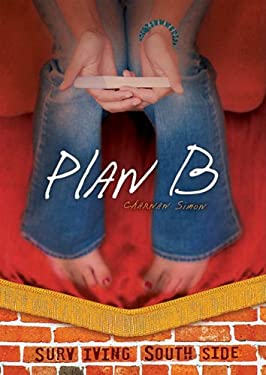
Review: Plan B by Charnan Simon

Synopsis from Goodreads:
Is this happily ever after? Lucy has her life planned out: she'll graduate and then join her boyfriend, Luke, at college in Austin. She'll become a Spanish teacher and of course they'll get married. So there's no reason to wait, right? They try to be careful. But then Lucy gets pregnant. Now, none of Lucy's options are part of her picture-perfect plan. Together, she and Luke will have to make the most difficult decision of their lives.

Review:

Plan B was an interesting book. I read it because I wanted to learn more about teen pregnancies and the consequences. However, at only a hundred pages, it didn't have much room to delve into the issues at a great length.

The story was quite typical and there weren't any great shocks or surprises. Pretty much all the characters reacted how I thought they would. I didn't like how quickly some of the characters got over their feelings or changed their mind. Realistically, it would've taken them longer to be accepting. Plan B needed more depth.

I did like all the characters because they were interesting and I sympathised with them, especially Lucy. They would be memorable characters if they had been more complex. Perhaps the author intended it this way so that all readers would be able to relate to the characters and find similarities, but it didn't work for me.

This would be a great book to read in a Health class because Plan B is a template to work from. The ending was open and left many questions. Discussing the possible answers would be helpful in a class environment. The reader never finds out what Lucy will do past the first doctor's meeting. This uncertainty was a theme of the book and I wasn't surprised that it ended in this way, however, I prefer closed endings and thus would like to have known what happened next.

Overall, Plan B was an enjoyable book to read as it highlighted some questions on the issue of teen pregnancies. The story takes place before the start of Lucy's pregnancy and ends around the two month mark.While it did discuss many of the issues, like if Lucy would get to go to college, it wasn't with any great depth. I really did want to know what happened next. Plan B is worth a read.

Rating: 3/5
Concept: 3/5
Cover: 3/5
Author: Charnan Simon

-With thanks to Netgalley!

Monday, 28 February 2011

Review: Among The Hidden (Shadow Children #1) by Margaret Peterson Haddix

Synopsis from Goodreads:


Luke has never been to school. He's never had a birthday party, or gone to a friend's house for an overnight. In fact, Luke has never had a friend.

Luke is one of the shadow children, a third child forbidden by the Population Police. He's lived his entire life in hiding, and now, with a new housing development replacing the woods next to his family's farm, he is no longer even allowed to go outside.
Then, one day Luke sees a girl's face in the window of a house where he knows two other children already live. Finally, he's met a shadow child like himself. Jen is willing to risk everything to come out of the shadows -- does Luke dare to become involved in her dangerous plan? Can he afford not to?

Review:
 
Among The Hidden was a great book. I really enjoyed it. It was fast paced, gripping and had me on tenter-hooks. It had great twists and turns with a few shocks in store. The main character, Luke Garner, was excellent. The reader was informed of his thoughts, feeling and perceptions about his restricted world. I felt like I was with Luke during every moment of his extremely difficult experiences.
 
According to the authorities, he should not have existed which made him a fugitive and a prisoner in his own home. Before the construction of the housing development, Luke had a bit more space to roam around due to the encircling woods. After they were cut down, Luke had to retreat into his house and finally to the attic. Although his family loved him, his presence was dangerous for them and they began to perceive him as a nuisance. They continuously worried about his movements being noticed by the neighbours.
 
As he was not supposed to exist, the threat of the Population Police that could sweep down on him at any moment, was an ominous and palpable presence throughout the book. The law forbidding a third child in a family was created because the government thought that there wasn't enough food in the world for everyone. Therefore, his every mouthful was perceived as a crime.
 
I felt really sorry for Luke as he felt guilty for something he had no control over. It was such a terrible situation to be in but it was very realistically portrayed. Jen Talbot was an inspirational character for Luke. She, too, was a third child. She was inspirational because she told Luke to be brave, to not feel guilty for the simple fact of existing and to take a risk for greater gain. She had a permanent effect on his life as she was the catalyst that propelled him into the dramatic events that would follow in the succeeding books.
 
In the finale, Luke gets help from an unexpected source and he, as well as the reader, are first suspicious and then, pleasantly surprised by these turn of events. Overall, Among The Hidden was a fantastic book and a great dystopian book. I first read this six years ago and then again now and it has remained a favourite. Read it and immerse yourself in Luke's world.  
 
Rating: 5/5
Concept: 5/5
Cover: 4/5
Author: Margaret Peterson Haddix
 
This review is part of Dystopian February at Presenting Lenore.

Sunday, 27 February 2011

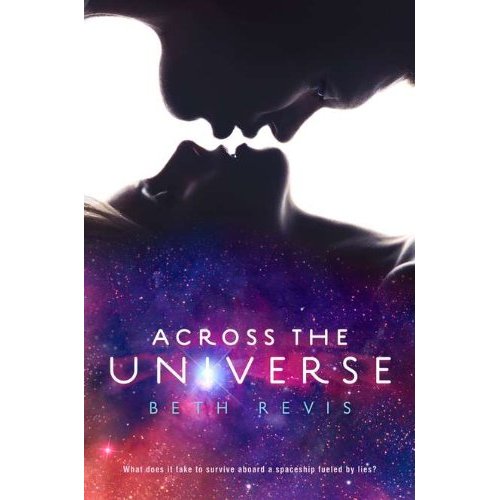
Review: Across The Universe by Beth Revis

Synopsis from Goodreads:


A love out of time. A spaceship built of secrets and murder.

Seventeen-year-old Amy joins her parents as frozen cargo aboard the vast spaceship Godspeed and expects to awaken on a new planet, three hundred years in the future. Never could she have known that her frozen slumber would come to an end fifty years too soon and that she would be thrust into the brave new world of a spaceship that lives by its own rules.

Amy quickly realizes that her awakening was no mere computer malfunction. Someone-one of the few thousand inhabitants of the spaceship-tried to kill her. And if Amy doesn't do something soon, her parents will be next.

Now Amy must race to unlock Godspeed's hidden secrets. But out of her list of murder suspects, there's only one who matters: Elder, the future leader of the ship and the love she could never have seen coming.

Review (with spoilers):

I was excited to read Across The Universe because not only did the synopsis promise an amazing story inside but I'd read a lot of great reviews for it and thus knew that a lot of people liked it and therefore, there would be a strong likelihood that I would too.

I enjoy sci-fi and watching Star Trek. Alas, I didn’t enjoy Across The Universe for the most part. I’ve read Across The Universe can be read by people who don’t necessarily read or enjoy sci-fi but the story left me with a lot of questions.
Technology

The beginning was interesting as Amy makes the decision to go with her parents (in a cryogenic state) on a journey to another planet that would take 300 years to complete. The process of Amy and her parents being put into stasis was very detailed, however Revis had not explained why they were leaving Earth in the first place and I believe that this was an essential piece of information that was overlooked.

Nothing major like an apocalypse could have taken place as Amy wondered about how Jason (her boyfriend) had probably got married and had children and now, 300 + 1 years later, his descendants would be alive on Earth. Furthermore, I wanted to know when the probe that was originally sent to the destination planet left Earth and when (if ever) it came back as Godspeed left in 2036. Shouldn’t the probe have been able to detect signs of life? Additionally, I wanted to know how many light years away the destination planet was meant to be as this is the first thing one should ask when travelling on a space ship.

While the description of how they were put into stasis was thorough, I wasn’t given the reason for why tubes were pushed down their throats. I thought it was because they couldn’t breathe the blue liquid in, but it turned out that they had to breathe that in anyway. Furthermore, though they put eye drops in so they wouldn’t go blind, they didn’t put anything in their ears so they wouldn’t go deaf. Also, how was Amy able to hear through the ice whilst in stasis as the ice would have covered her ears?

The reason for why the ship left a year late was not explained. Nonetheless, human cargo should be put on last. The cryochamber should have had more failsafe devices as there was only one alarm for all the chambers. When the temperature of the frozen person rises, the lid should open automatically so they don’t drown. These felt like grave technological oversights. Amy was pushing at the lid of her chamber when she woke up, but realistically, her muscles wouldn’t have been working properly to even lift her arms.
In truth, the ship had been travelling for more than 450 years, so the cryochambers would have broken down as they were made for a journey lasting 300 years. The question of how many chambers were there in total wasn’t answered. How did the Doctor (and the previous doctors) maintain all of them and repair them if they broke as there would only be a certain amount of spare parts in stock.

There was some interesting technology mentioned in Across The Universe such as grav tubes (similar to elevators but the person needs to be connected to the wi-com system) and floppies- slim, handheld computers. I was surprised there wasn’t better CCTV on board and especially in the cryochamber level. The explanation for how the ship had functioned for so long was that renewable fuel was being used but it didn’t go any deeper than that.

Just before they were cryogenically frozen, Amy’s father gave her the option of remaining on Earth and told her he didn’t think she would come with them. Amy was torn but decided to follow her parents, however, the reader later learns that she didn’t have a packed trunk. For 301 years they took an empty trunk that could have been filled with educational books or other essential equipment.

Content

There were some scenes of a sexual nature which were very graphic and explicit. There were also mentions of incest and some violence. There was nudity and suicide. Amy was the victim of attempted rape which was one of the most shocking moments in the book. As can be seen, Revis deals with some tough and sensitive subjects. However, the one thing that is altered is the swearing, as can be seen from the use of ‘Frex.’

Elder

I grew frustrated of Elder as the story went on; this was mostly due to his ignorance. Throughout the entirety of the book, Elder has only one lesson with Eldest and that is to find the three causes of discord- difference, lack of a strong central leader and finally, at the end of the book he is told the third one- individual thought. Just because Eldest didn’t like him or trust him, didn’t mean that Elder couldn’t have been more forceful in asking for lessons. If he was going to be the next leader, he needed to be educated.

Perhaps the most unbelievable thing was that he didn’t even know the date of when the Plague had happened. Elder admitted to Amy that Eldest had told him about the Plague but that he didn’t know when it had happened. I found this strange because the first question someone asks about an event that happened in the past, is when it happened. If Elder didn’t even know the date of the one significant event that had taken place on Godspeed, I didn’t think he could be a leader.

I found the romance side to be quite dull. As soon as he sees Amy, Elder was enamoured with her. He lusted after her a lot and described her ‘sunset’ hair increasingly as the story went on and this became tedious to read. It seemed like it would become a love triangle with the introduction of Harley, but Amy and Elder were too wrapped up in each other to even notice him sinking into depression.

What annoyed me was when Elder berated Harley for looking at the stars and not keeping watch of the frozens when he, himself hadn’t even taken a watch (actually, Elder doesn’t take a watch until very near the end of the book. Amy didn’t take a watch at all even though she constantly worried over whether her parents were being murdered at that moment).
When Elder does finally take a watch over the frozens, he goes to sleep immediately in front of the elevator which defeated the purpose of a ‘watch’. The straw that broke the camel’s back was that Harley and Elder took their watches without a weapon at hand. They were trying to catch a murderer and they weren’t even armed. What was Harley going to do with only a paint brush? Paint the murderer to death? Why did Elder think the murderer would be scared of him if he saw him sleeping there? They wouldn’t be.

I’d figured out who the murderer was long before it unfolded in the story so it wasn’t a surprise. The list of suspects wasn’t that long. There should have been a few more red herrings thrown in. I realised who the ‘middle’ elder was as well; Orion. As I said, there weren’t many characters to pick from. What I found strange was that Eldest and Doc had never seen the middle elder once in sixteen years, even though he was just there, in the recorder hall. Eldest kept saying he was the leader of the ship, yet he didn’t even know who was running the recorder hall.
All my uses of Elder, Eldest and middle Elder in this review sounds complicated as it’s hard to tell who is who. In Across The Universe, Elder/Eldest are not differentiated from each other in any way, not even by numbers, thus making everything that much more complicated. It’s not even known how many Eldests there have been. Also, it would be very hard to talk about them. The only other Eldest they discussed was the ‘Plague Eldest’, but what was the one after him called? Or the one after that one?

At the end of the book, Elder tells Amy that he unplugged her. I knew that this had been a strong possibility. By this point, I had realised that Elder was as bad as Eldest and the middle Elder. This is because Eldest was prepared to kill people if it suited his purposes and he drugged the populace into submission. Middle Elder callously killed frozens and calmly killed Eldest.
Elder too killed the middle Elder as it suited his purposes. He killed him just when middle Elder was about to reveal to Amy that Elder had unplugged her. Though it was said that he may still be alive, in my opinion, the chances of that would be very slim as he wasn’t prepped at all; the tubes weren’t down his throat, the eye drops hadn’t been put in and so on. He cannot be brought back from that totally unharmed.

When reading, I asked myself why Eldest and Elder would have the same access clearance. I understand that they’re clones and thus have the same DNA but logically, Eldest would have clearance for some of the more top secret information that he wouldn’t want Elder to know. It would have been pretty easy to use voice recognition software instead of fingerprints as their voices are not the same.

Amy

I liked Amy to begin with but as the story went on I felt that she was slow to figure out what was going on and to find the link between the victims which was pretty obvious. At the end, she doesn’t figure out that Steela is going to be killed until after it happens. Also, I didn’t know why she would put the information on her wall as anyone would be able to walk in and see it, including Eldest and Doc.

Though Eldest had threatened to kill her and hadn’t, he didn’t even confine her to her room, or to the Feeder Level. She was allowed to go wherever she pleased even though many of the populace weren’t allowed to. At the end, Amy states that she would correct Earth’s records but she doesn’t know enough to change much.

Other questions I had included:

• Why didn't Orion kill all the frozens at once rather than going around killing them one by one?

• Why would he mark his targets with red Xs as this would let everyone know his targets?

• Why did he pull all the trays out but not flick the switch? You would do it as you went along.

• How did Orion know they might be changed into slaves by the frozens once they reached the planet? And if Eldest told him, how did he know?

Overall, Across The Universe had an interesting premise which I was excited to read about. The pace was slow in the middle, but the beginning and end were good pace-wise. The story had a lot of potential in the beginning and the world Revis created was quite solid and unique. For me, the story picked up at the end but it was too late by then. It left me with a lot of questions. However, people will enjoy Across The Universe if they are looking for light sci-fi with a bit of mystery and romance.
Rating: 2.5/5
Concept: 4/5
Cover: 5/5
Author: Beth Revis

This review is part of Dystopian February at Presenting Lenore.